




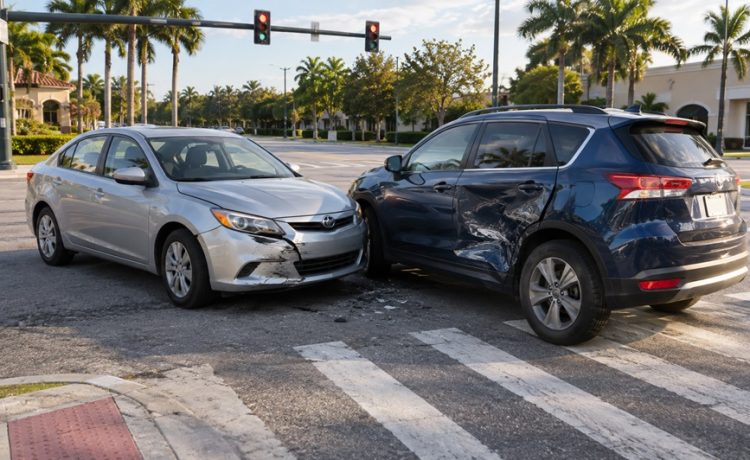
A street name can identify where an intersection crash happened. It may take several more details to explain how the vehicles came together. One driver might describe heading north through the junction while another remembers waiting in a left-turn lane on the cross street. Those accounts make more sense once each vehicle has a starting point and a direction.
Kevin L. Sullivan II lists car accident representation on his Florida law practice’s website. For people contacting the practice about an intersection collision, a useful description begins with the two roads and the movement each person remembers. The street names, direction of travel, and intended turn give the conversation a clearer starting point.
Describe each vehicle’s approach
An intersection can have several lanes, turn pockets, and driveways close to the corner. “I was making a left” leaves open which road the driver came from and which road they were entering. “I was heading north on Oak Street in the left-turn lane and turning onto Pine Avenue” places that movement at a specific point. If the other vehicle’s approach is unclear, that detail can stay open in the description.
A simple sketch can help when an intersection is difficult to describe aloud. The roads and lane markings can go down first, followed by an arrow for each movement the person recalls. A turn lane, median, or nearby driveway can provide a reference point. Even a rough sketch is easier to follow when it labels each approach and shows which details are approximate.
Identify which signal someone saw
A person may remember seeing a green light and still be unsure whether it was a round light for through traffic or an arrow for a particular turn. The same distinction applies to where a person was looking. A driver may have seen the signal facing their own lane, while someone on the sidewalk may have been looking across the intersection at a different signal.
For an inquiry to Sullivan’s car accident practice, it helps to tie a signal observation to a person and a moment. A driver might remember the light while waiting at the line and be unsure what it showed when the vehicle began moving. An account can include both details in that order. The timing question can then be discussed separately from the person’s recollection of the light.
Explain what each image shows
An existing photo of the corner may show where a lane begins or where a driveway joins the road. A dashcam clip may show only the approach from one vehicle. A short label such as “view from the northbound lane” or “photo taken after the vehicles were moved” can clarify what someone is looking at. If the date or vantage point is uncertain, the label can reflect that.
Sullivan’s car accident page identifies the practice area. A short description of the specific intersection, the movements people remember, and the views shown in any images gives the first conversation a concrete place to begin.