




The United States criminal court system is a foundational pillar of American jurisprudence, designed to maintain social order, protect constitutional rights, and ensure that individuals accused of breaking the law receive a fair and impartial trial. Unlike civil courts, which typically resolve disputes between private parties over contracts, property, or personal injuries, criminal courts handle offenses committed against the peace and dignity of the state or the federal government. The gravity of criminal proceedings stems from the potential loss of liberty or even life, which necessitates rigorous procedural safeguards and a high burden of proof known as beyond a reasonable doubt.
Navigating this intricate judicial framework requires a thorough understanding of federalism, dual court structures, procedural milestones, and the roles played by various legal actors. This guide provides a comprehensive overview of how the American criminal court system operates from the initial accusation through trial, sentencing, and potential post-conviction relief.
Dual Court System: Federal Versus State Jurisdiction
The American legal landscape features a dual court system, splitting authority between the federal government and individual state governments. This division of power is rooted in the United States Constitution, which limits the scope of federal authority while reserving general police powers for the states.
State Criminal Courts
The vast majority of criminal cases in the United States are tried in state courts. State criminal laws govern offenses committed within a specific state’s borders, ranging from minor infractions and misdemeanors like petty theft or reckless driving to severe felonies such as murder, rape, and kidnapping. Each state maintains its own constitution, court rules, and penal codes, resulting in variations in procedures and sentencing guidelines across state lines. A typical state court hierarchy consists of:
-
Courts of Limited Jurisdiction: These municipal, traffic, or magistrate courts handle minor offenses, preliminary hearings, and initial arraignments.
-
Courts of General Jurisdiction: Often called trial courts, circuit courts, or superior courts, these tribunals handle major felony and misdemeanor trials.
-
Intermediate Appellate Courts: These courts review trial court decisions for legal errors without conducting new trials or hearing new evidence.
-
State Supreme Courts: As the highest authority within a state judicial system, the state supreme court makes final determinations on matters of state constitutional law and state statutes.
Federal Criminal Courts
Federal criminal courts handle offenses that violate federal statutes, cross state boundaries, or occur on federal property. Examples of federal crimes include tax evasion, immigration violations, counterfeiting, drug trafficking across state or international borders, white-collar crimes, and offenses committed against federal officials. The federal court structure consists of three primary tiers:
-
United States District Courts: These are the federal trial courts of general jurisdiction, with at least one district court in every state and territorial possession.
-
United States Courts of Appeals: Commonly referred to as circuit courts, these appellate courts review decisions rendered by the district courts within their respective geographic circuits.
-
United States Supreme Court: The highest court in the nation, the Supreme Court possesses ultimate appellate jurisdiction over federal constitutional questions and federal statutory interpretations, though it exercises discretion over which cases it chooses to hear via petitions for a writ of certiorari.
Key Stages of a Criminal Court Proceeding
A criminal case moves through a series of structured procedural phases. Each stage is designed to protect the constitutional rights of the accused while advancing the pursuit of justice.
Investigation and Arrest
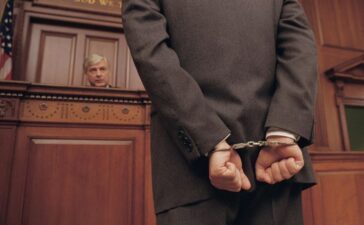
The criminal justice process typically begins with a law enforcement investigation. If police officers gather probable cause—meaning facts and circumstances that would lead a reasonable person to believe a crime has been committed and the suspect committed it—they may arrest the individual or obtain an arrest warrant from a judge.
Initial Appearance and Arraignment
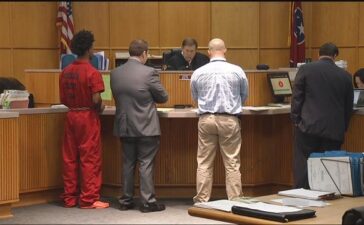
Following an arrest, the defendant must be brought before a judge without unnecessary delay, typically within 24 to 48 hours. During this initial appearance, the defendant is informed of the charges against them, advised of their constitutional rights including the right to counsel and the right to remain silent, and a determination regarding bail or pretrial release is made. At the formal arraignment, the defendant enters a plea of guilty, not guilty, or no contest.
Preliminary Hearing or Grand Jury
In felony cases, the prosecution must demonstrate sufficient evidence to justify moving forward. In some jurisdictions, this occurs through a preliminary hearing where a judge hears testimony and decides if probable cause exists. In other jurisdictions, including the federal system and various states, a grand jury of citizens reviews evidence presented by prosecutors in secret to decide whether to issue an indictment or a true bill.
Pretrial Motions and Discovery
Before trial, defense attorneys and prosecutors engage in discovery, a process where both sides exchange evidence, witness lists, and police reports. Defense counsel may file pretrial motions to suppress evidence obtained in violation of the Fourth Amendment or to dismiss charges due to procedural defects. The vast majority of criminal cases resolve during this phase through plea bargaining, where the defendant agrees to plead guilty in exchange for a reduced sentence or lesser charges.
The Trial Process
If a case proceeds to trial, the proceedings follow a strict sequence designed to ensure fairness:
-
Jury Selection: Potential jurors are questioned by the judge and attorneys during voir dire to eliminate bias and select an impartial jury panel.
-
Opening Statements: Both the prosecution and the defense outline the evidence they intend to present.
-
Presentation of Evidence: The prosecution bears the burden of proof and presents witnesses and physical evidence first. The defense has the opportunity to cross-examine prosecution witnesses and can subsequently present its own evidence or choose to remain silent.
-
Closing Arguments: Attorneys summarize the evidence and argue why the jury should find in favor of their client.
-
Jury Instructions and Deliberation: The judge instructs the jury on the applicable law, and the jurors retire to deliberate in private until they reach a unanimous verdict.
Sentencing and Appeals
If the defendant is convicted, the judge imposes a sentence, which may include imprisonment, probation, fines, community service, or restitution. Defendants convicted in trial courts retain the right to appeal their conviction to a higher court, arguing that legal errors occurred during the trial that compromised the fairness of the proceedings.
Key Participants in the Criminal Courtroom
The administration of justice relies on several key professionals working within the courtroom environment, each serving distinct functions to maintain the integrity of the adversarial system.
The Judge
The judge acts as a neutral and impartial arbiter of the law. Throughout the trial, the judge rules on the admissibility of evidence, manages courtroom decorum, instructs the jury on legal standards, and ultimately determines the appropriate sentence for convicted defendants in non-capital cases where sentencing authority rests with the bench.
The Prosecutor
Representing the government or the state, the prosecutor carries the burden of proving the guilt of the defendant beyond a reasonable doubt. Prosecutors have broad discretion regarding which cases to file, what charges to bring, and whether to offer plea agreements. Ethical guidelines require prosecutors to seek justice rather than merely secure convictions.
The Defense Attorney
The defense attorney advocates zealously for the rights and interests of the accused. Whether hired privately or appointed as a public defender for indigent defendants, counsel ensures that constitutional rights are upheld, investigates the facts, challenges the prosecution’s evidence, and presents an effective defense strategy.
The Jury
In most serious criminal trials, a jury of impartial peers drawn from the local community listens to the evidence and determines the facts of the case. Their verdict must be unanimous in federal trials and nearly all state criminal trials.
Frequently Asked Questions
What is the difference between a misdemeanor and a felony?
Misdemeanors are less serious offenses typically punishable by fines, probation, or short-term incarceration in a local jail, usually not exceeding one year. Felonies are severe crimes such as grand larceny, armed robbery, or homicide, which carry potential sentences of more than one year in state prison or federal penitentiary, along with long-term civil disenfranchisement.
What does beyond a reasonable doubt mean?
Beyond a reasonable doubt is the highest standard of proof in the American legal system. It requires the fact-finder, whether a judge or a jury, to have a moral certainty that the accused committed the crime charged, leaving no logical explanation other than guilt based on the evidence presented.
Can a defendant be forced to testify in a criminal trial?
No. Under the Fifth Amendment of the United States Constitution, a defendant has the absolute right to remain silent and cannot be compelled to testify against themselves. Choosing not to testify cannot be used by the prosecution or the jury as evidence of guilt.
What is a plea bargain?
A plea bargain is an agreement between the defendant and the prosecutor where the defendant agrees to plead guilty to a specific charge or a lesser offense in exchange for a more lenient sentence, the dropping of other charges, or a recommendation for specific sentencing terms by the prosecutor.
What happens if a jury cannot reach a unanimous verdict?
If the jury is deadlocked and unable to reach a unanimous decision despite prolonged deliberation, the judge declares a mistrial. This results in the dismissal of the jury, and the prosecution must decide whether to retry the case before a new jury or drop the charges entirely.
How does the grand jury differ from a trial jury?
A grand jury is an investigative body consisting of citizens who review evidence presented solely by the prosecutor to determine if there is enough probable cause to issue an indictment. A trial jury, or petit jury, hears evidence from both the prosecution and the defense during a formal trial to determine the ultimate guilt or innocence of the accused.